
Los Angeles is famous for its architectural history. From the mid-century modern masterpieces in the Hollywood Hills to the historic Craftsman bungalows of Pasadena and the classic Spanish Colonial Revivals in Silver Lake, our city’s older homes possess irreplaceable character. However, if you own or just purchased a property built before the late 1980s, that historic charm hides a hidden risk: asbestos.
When you plan a home remodel—whether it is a simple kitchen update or a complete gut renovation—disturbing old building materials can release microscopic, toxic fibers into the air. Securing professional asbestos testing Los Angeles homeowners trust is not just a smart safety measure before construction begins; it is a critical step to safeguard your family’s health and ensure your project complies with strict California environmental regulations.
This comprehensive guide breaks down exactly what asbestos is, where it hides in local properties, how the inspection process works, and how to navigate a remodel safely without delaying your timeline or breaking your budget.
What is Asbestos and Why is it Lurking in LA Homes?
Asbestos is a group of naturally occurring silicate minerals that industries once widely used across the globe. Thanks to its incredible heat resistance, high tensile strength, and exceptional insulating properties, manufacturers mixed asbestos into thousands of building applications throughout the 20th century.
Because Los Angeles experienced massive housing booms between the 1920s and the 1980s, a significant portion of our local housing stock relies heavily on these materials.
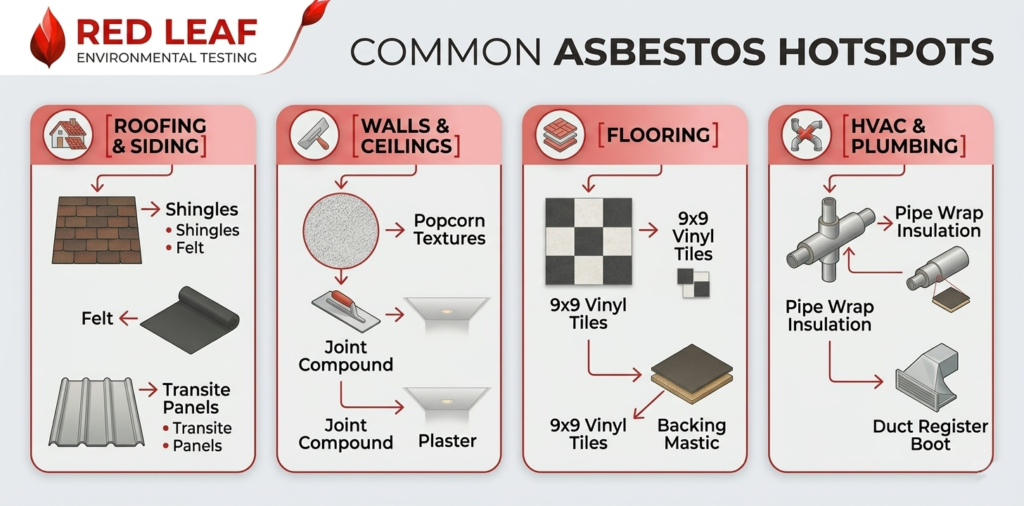
The federal government began phasing out and banning specific asbestos-containing materials (ACMs) in the late 1970s and 1980s under the Environmental Protection Agency (EPA) and the Consumer Product Safety Commission. However, existing inventories were salvaged and installed well into the late 1980s. If your Los Angeles property was constructed before 1990, you must assume asbestos is present until a certified asbestos inspector Los Angeles teams verify otherwise through lab analysis.
The Hidden Danger: What Happens During a Renovation?
In its undisturbed, intact state, asbestos generally does not pose an immediate health threat. This is known as non-friable asbestos, meaning the fibers are securely bound within a solid matrix (like intact vinyl floor tile).
The danger spikes drastically during a renovation. Activities like sawing, drilling, scraping, tearing down walls, or ripping up old floors transform stable materials into a friable state.
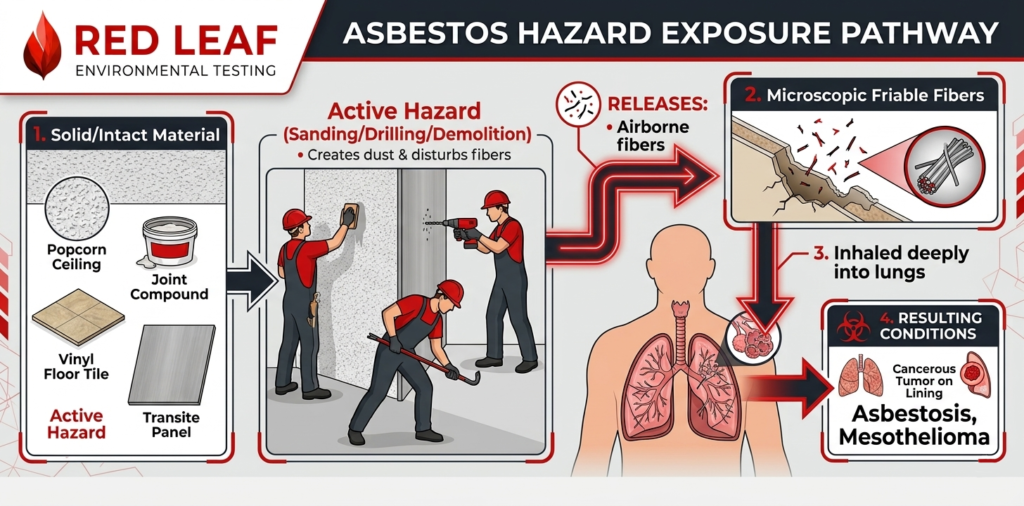
Because these fibers are microscopic, they remain suspended in the indoor air column for hours, easily migrating through your home’s HVAC system. When inhaled, these jagged fibers lodge deep within lung tissue. Over decades of chronic exposure—or even brief, intense exposure during a demolition project—this causes severe, irreversible medical conditions:
- Mesothelioma: A rare, aggressive cancer of the lining of the lungs and abdomen, directly tied to asbestos exposure.
- Asbestosis: A chronic, progressive lung disease caused by scar tissue buildup in the lungs, leading to severe shortness of breath.
- Lung Cancer: A risk that increases exponentially if the exposed individual is also a smoker.
Partnering with a dedicated asbestos testing company Los Angeles relies on prevents these microscopic particles from contaminating your living spaces in the first place.
The Benefits of Pre-Renovation Asbestos Testing
Investing in an asbestos inspection Los Angeles service before your contractor swings the first hammer offers several distinct advantages for your health, wallet, and timeline.
1. Absolute Health Protection
The primary benefit is peace of mind. Knowing exactly which walls, ceilings, or floors contain asbestos allows you to put proper containment protocols in place, protecting your children, pets, and yourself from inhaling toxic dust.
2. Preventing Extreme Liabilities and Fines
In California, regulatory bodies like the South Coast Air Quality Management District (SCAQMD) and Cal/OSHA enforce strict rules regarding hazardous materials. If a contractor unknowingly disturbs asbestos, they can halt your project instantly, fine you thousands of dollars, and require a highly expensive, emergency hazardous waste cleanup.
3. Preserving Property Value and Transaction Cleanliness
If you intend to flip an older home or remodel it before putting it on the market, documented clean testing reports—or certified abatement clearances—are vital assets during real estate disclosures. Modern buyers demand transparency regarding environmental hazards.
Common Mistakes Property Owners Make During Remodels
Even experienced property owners run into costly setbacks by making incorrect assumptions about hazardous materials.
- Assuming New Material Means Zero Risk: Many homeowners assume that if a room was updated in the 1990s or 2000s, it is completely safe. However, older layers of flooring or drywall joint compounds often hide directly beneath modern renovations.
- Relying on Visual Inspection Alone: You cannot see, smell, or taste asbestos. A piece of drywall from 1950 looks virtually identical to a piece from 2010. Only polarized light microscopy (PLM) inside a licensed laboratory can confirm its presence.
- Using DIY Asbestos Test Kits: While hardware store kits seem convenient, they often yield false negatives due to poor sampling techniques. Furthermore, scraping a sample yourself without professional negative-pressure containment can accidentally contaminate your room.
- Hiring the Same Company for Inspection and Abatement: This represents a major conflict of interest. An unethical company might claim you have an asbestos emergency just to charge you thousands for removal. Always work with an independent consulting firm like Red Leaf Environmental for unbiased testing, then hire a separate contractor for removal.
The Step-by-Step Professional Asbestos Testing Process
When you book a professional residential asbestos testing Los Angeles service, our certified technicians follow a precise, heavily regulated workflow to ensure accuracy and safety.
Step 1: Visual Assessment & Mapping
The inspector reviews your home’s construction blueprints, identifies the areas slated for remodel, and locates all suspect materials that demolition will impact.
Step 2: Safe Sample Collection
The technician dampens the target material with a specialized water solution to prevent fiber release, cuts a small core sample, and seals it instantly in an airtight vial.
Step 3: Laboratory Analysis
Samples travel to a National Voluntary Laboratory Accreditation Program (NVLAP) accredited facility. Lab technicians analyze the material using Polarized Light Microscopy (PLM) to identify exact percentages of asbestos varieties like chrysotile or amosite.
Step 4: Comprehensive Reporting
You receive an official document mapping out exactly where asbestos lives, its condition, and formal recommendations for safe management or removal.
Key Differences: Testing Methods and Scopes
| Inspection Feature | Asbestos Bulk Testing | Asbestos Air Quality Testing |
| Primary Target | Physical building materials (drywall, tile, plaster). | Airborne fibers floating in the room environment. |
| When to Use | Before you begin demolition or remodeling projects. | During or after abatement to certify the room is clean. |
| Lab Method | Polarized Light Microscopy (PLM). | Phase Contrast Microscopy (PCM) or TEM. |
| Primary Goal | Locate and identify potential hazards before disruption. | Verify air columns are safe for human occupation. |
California Asbestos Rules at a Glance
Do I need asbestos testing before renovating an older home in Los Angeles?
Yes. Regulatory bodies like the South Coast Air Quality Management District (SCAQMD) Rule 1403 require property owners to conduct a thorough asbestos survey by a certified professional prior to any demolition or renovation work, regardless of the building’s age.
Essential Pre-Renovation Checklist:
- Identify the exact build year of your Los Angeles home.
- Hire an independent, certified inspector to sample materials in the renovation zone.
- Keep testing paperwork on-site for building inspectors and contractors.
- If testing returns positive results (>1% asbestos), hire a licensed remediation firm.
- Obtain a final asbestos air quality testing Los Angeles clearance before allowing your remodeling crew to rebuild.
Frequently Asked Questions (FAQs)
How much does asbestos testing cost in Los Angeles?
For a standard residential property, professional asbestos testing generally ranges from $250 to $750. The final investment depends entirely on the size of your home, how many distinct materials need sampling, and how quickly you need the lab results returned. While DIY kits look cheaper upfront, a certified lab report protects your family’s health and satisfies city permitting offices.
How long does asbestos testing take?
The physical on-site inspection and sample collection process usually takes between 1 to 2 hours. Once samples travel to the laboratory, standard analysis takes 2 to 5 business days. If you are facing tight construction schedules, expedited 24-hour turnaround options are available.
Can I stay in my home during asbestos testing?
Yes. Professional technicians isolate the tiny areas where they collect physical bulk samples. They use wet-sampling methods and seal each site immediately, which keeps the process completely safe for occupants. You do not need to move out or vacate the premises during a routine inspection.
What happens if asbestos is found during the inspection?
Discovering asbestos does not mean your renovation is ruined. If the lab detects asbestos in concentrations greater than 1%, you must hire a separate, licensed asbestos abatement contractor to remove or encapsulate the materials safely before your main construction crew can begin work.
Real-World Scenario: A Silver Lake Kitchen Remodel
Consider a recent project involving a 1940s home in Silver Lake. The new owners planned to tear down a partition wall to create an open-concept kitchen and replace the old vinyl floor.
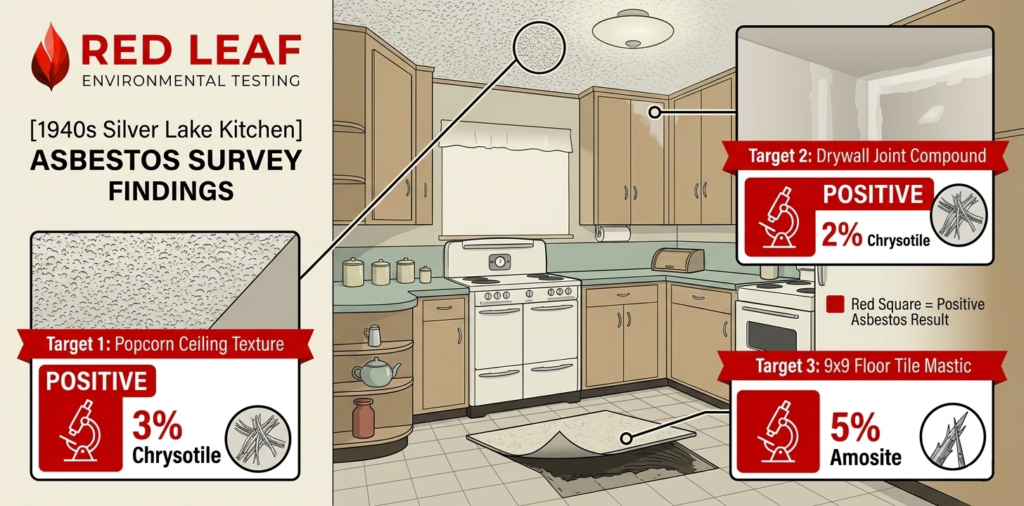
Instead of moving forward blindly, they called in a professional inspection team. Testing revealed that the ceiling texture, the drywall joint compound behind the plaster, and the black adhesive mastic underneath the vinyl flooring all contained significant amounts of asbestos.
By identifying these hazards early, the owners hired a licensed abatement crew to safely clear the kitchen under negative pressure containment over a single weekend. Their main remodeling contractor stepped into a completely clean, safe space on Monday morning, avoiding toxic exposure and saving thousands in potential OSHA stop-work penalties.
Best Practices for a Safe, Compliant Remodel
To keep your renovation running smoothly, implement these professional standards from day one:
- Test Early: Schedule your environmental assessments at least 2 to 3 weeks before you expect construction to start. This gives you plenty of buffer room for lab processing and any necessary remediation.
- Inform Your Contractor: Share your certified asbestos report directly with your general contractor. Reputable builders will appreciate the transparency and demand this paperwork to protect their workers under Cal/OSHA standards.
- Check Licensing: Always verify that your testing firm is certified by the California Department of Industrial Relations (DIR).
Conclusion: Protect Your Investment and Your Health
Renovating an older Los Angeles home is an exciting way to breathe fresh life into historic architecture and build equity. However, those old walls require careful handling. Conducting professional asbestos testing Los Angeles prior to demolition is the absolute best way to ensure your dream remodel does not turn into an environmental hazard or a legal headache.
By partnering with an independent testing firm, you protect your family, your construction crew, and your financial investment from the severe consequences of airborne asbestos exposure.
Ready to start your home renovation with complete confidence? Contact Red Leaf Environmental today at +1 (213) 341-0436 or visit our local office at 939 S Broadway, Suite/Apt 711, Los Angeles, CA 90015. Our certified inspectors provide accurate, fast, and completely unbiased testing to keep your project safe and compliant.