
| TL;DR: Post-Water Damage Mold SafetyThe Hidden Threat: Standard home surfaces can feel dry on the outside while trapping water inside wall cavities, creating a perfect breeding ground for mold. The Tight Timeline: Mold spores can activate and begin to grow within 24 to 48 hours of initial water exposure. The Solution: A professional mold inspection uses advanced tools (like thermal imaging and moisture meters) to trace hidden leaks, protect family health, and provide documentation for insurance claims before rebuilding. |
Discovering water damage in your home is a stressful experience. Whether it is a burst pipe in the walls, a failing water heater, or sudden flash flooding, the immediate aftermath is usually a chaotic scramble to dry out your property. However, once the standing water is gone and the carpets feel dry to the touch, a hidden, slow-moving threat begins to develop behind your drywall and under your floorboards.
If you live in Southern California, scheduling a professional mold inspection Los Angeles homeowners rely on is the single most critical step you can take after any moisture intrusion.
Water damage and mold go hand in hand. In the unique climate of Los Angeles where coastal humidity can trap moisture indoors and high seasonal temperatures create prime incubation environments hidden microbial growth can quickly compromise both your structural integrity and your family’s respiratory health. This guide breaks down exactly how a professional inspection protects your property, what the process looks like, and how to successfully navigate the recovery phase.
What is a Post-Water Damage Mold Inspection?
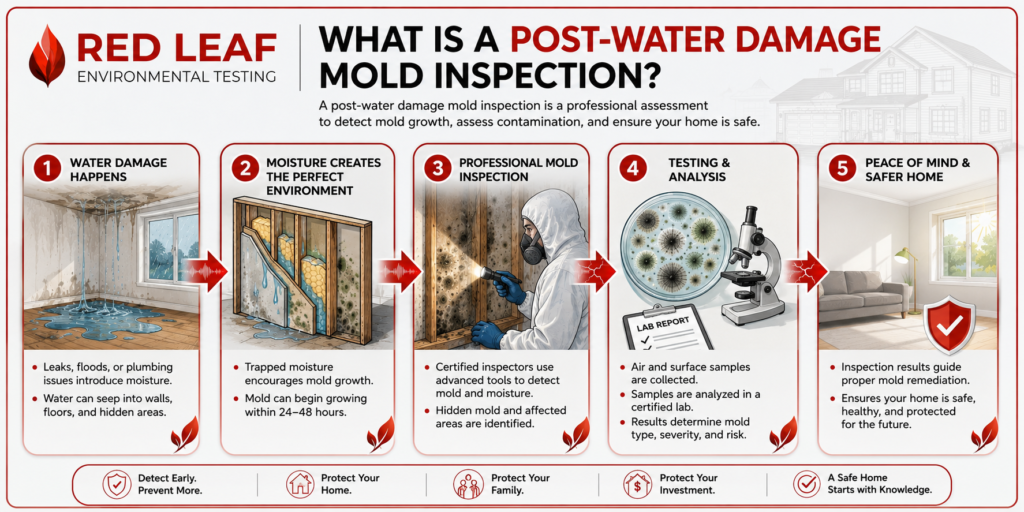
A professional inspection is a systematic, data-driven assessment of a property to identify, locate, and document moisture issues and subsequent microbial growth. Unlike a casual visual check, a comprehensive water damage inspection Los Angeles relies on specialized diagnostic tools to find hidden water pockets that the human eye cannot see.
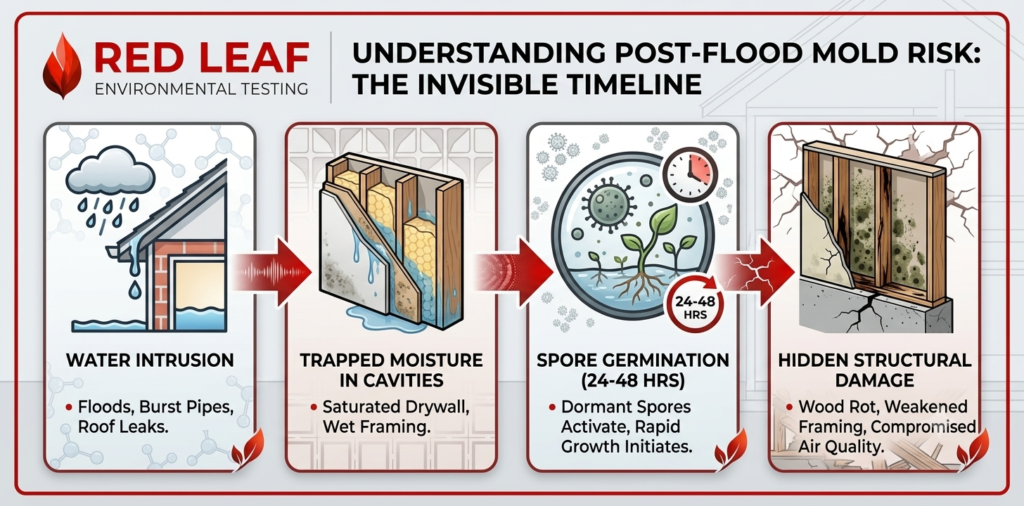
When a certified environmental professional evaluates your home, they look at the property through the lens of building science. They map the migration path of the water, locate hidden reservoirs of moisture within building materials, and determine whether elevated levels of airborne spores are present.
Why It Matters: The Invisible Timeline
Many homeowners assume that if they run a few box fans and dehumidifiers for a couple of days, they have solved the problem. Unfortunately, standard building materials like drywall, plywood, insulation, and carpeting are highly porous. They act like sponges, pulling water deep into structural framing cavities.
Once these organic materials become damp, dormant mold spores—which exist naturally everywhere in the environment—activate. Without a dedicated assessment, you could be sealing a thriving microbial colony inside your walls, leading to wood rot, degraded indoor air quality, and structural instability months down the road.
The Core Benefits of a Timely Mold Inspection in Los Angeles
Investing in a formal assessment before or immediately after hiring a remediation crew offers distinct advantages for property owners.
1. Pinpointing Hidden Moisture Pockets
Mold cannot grow without water. A professional inspector uses advanced diagnostic equipment to trace the boundaries of the water damage:
- Infrared Thermal Imaging: Infared cameras detect subtle temperature differentials caused by evaporative cooling, revealing exactly how high water traveled up a wall cavity without tearing down the drywall.
- Probeless Moisture Meters: These tools use electromagnetic signals to measure the moisture content of flooring, concrete subfloors, and wood framing without leaving holes.
2. Guarding Your Health and Indoor Air Quality
Active colonies release microscopic spores, fragments, and volatile organic compounds (mycotoxins) into your breathable air space. For individuals with asthma, severe allergies, or compromised immune systems, exposure can cause persistent respiratory irritation, headaches, and chronic fatigue. A precise diagnostic report establishes whether your living zones have been compromised.
3. Creating a Clear Blueprint for Remediation
If mold is present, you should never guess at the scope of the cleanup. A certified inspector provides an unbiased, third-party protocol outlining exactly which walls need removal, what structural elements require sanitization, and how containment zones should be established. This ensures you only pay for the exact cleanup you actually need.
4. Securing Insurance Claim Documentation
Navigating homeowners insurance after water damage is notoriously difficult. Insurance adjusters require clear, objective proof linking the water event to the microbial growth. A comprehensive inspection report from an independent professional provides the definitive paper trail required to validate your claim and secure proper coverage.
Common Mistakes Los Angeles Homeowners Make After Water Damage
Avoiding these critical missteps can save you thousands of dollars in long-term structural repairs.
- Relying Solely on DIY Consumer Test Kits: Cheap petri-dish kits from big-box hardware stores are fundamentally flawed. They simply tell you if spores are present in the air—which they always are in every home. They do not tell you the concentration, the specific species, or where the hidden growth is located.
- Assuming a Surface is Dry Because it Feels Dry: Drywall can feel completely bone-dry on the painted exterior while the paper backing on the interior side remains completely saturated, hosting a massive, invisible colony.
- Painting Over Visible Discoloration: Slapping a layer of bleach or primer over a dark spot on the wall does not kill the root system (hyphae) of the organism. It will quickly eat through the paint and reappear, having caused deeper structural decay in the meantime.
- Skipping the Post-Remediation Verification (PRV): Never let a restoration company declare a job “finished” without an independent, third-party inspection and air clearance test. You need absolute confirmation that the airborne spore counts have returned to normal baseline levels before rebuilding your walls.
Step-by-Step: The Professional Mold Inspection Process
When Red Leaf Environmental or another qualified specialist assesses your home after a leak, the process follows a structured, scientific methodology.
Phase 1: Visual Assessment & Environmental Mapping
The inspector performs a meticulous top-to-bottom walk-through of the impacted zones and adjacent rooms. They check structural pathways, structural supports, and subterranean crawlspaces or basements, mapping out potential pathways where moisture may have migrated.
Phase 2: Advanced Diagnostic Scanning
Using thermal imaging cameras and digital moisture meters, the technician scans your walls, ceilings, and floors. This phase defines the exact “dry-line” and identifies any lingering pockets of high humidity within concealed building interstitial spaces.
Phase 3: Strategic Environmental Sampling
Depending on the visual findings, the inspector collects physical samples to analyze the severity of the situation:
- Air Sampling (Spore Traps): Drawing a calibrated volume of air through a collection cassette to measure the concentration of airborne spores indoors compared to the outdoor baseline.
- Surface Sampling (Tape Lifts/Swabs): Collecting physical material from visible growth to identify the precise genus (such as Stachybotrys, Aspergillus, or Penicillium).
Phase 4: Laboratory Analysis & Formal Reporting
Samples are sent to an independent, accredited laboratory for microscopic analysis. The results are compiled into a comprehensive report featuring data tables, moisture maps, and an actionable scope of work for cleanup if necessary.
Quick Guide to Post-Flood Home Safety
What is the primary purpose of a mold inspection after water damage?
The primary purpose of a mold inspection after water damage is to definitively locate hidden moisture pockets, confirm whether microbial growth has initiated, identify the specific types of airborne spores present, and provide a verified, third-party data report for health safety and insurance coverage claims.
Immediate Post-Flood Action Protocol
- Safety First: Shut off main power breakers if water has reached electrical outlets or wall cavities.
- Stop the Source: Ensure the plumbing leak or water intrusion point is completely resolved.
- Document Everything: Take high-resolution photos and videos of all affected rooms, furniture, and standing water before any mitigation begins.
- Call the Professionals: Schedule a mold testing after water damage specialist within 24 to 48 hours of the initial water event to prevent widespread contamination.
Material Remediation Guidelines
| Material Type | Response Action | Notes |
| Drywall / Sheetrock | Cut out and dispose of if soaked for greater than 24 hours. | Cannot be thoroughly decontaminated if porous core is saturated. |
| Solid Hardwood Flooring | Evaluate with moisture meters; dry via specialized floor mats. | Can often be saved if dried rapidly before warping or cupping occurs. |
| Fiberglass Insulation | Immediate removal and replacement. | Loses R-value and traps toxic spores indefinitely. |
| Concrete Subfloors | Sanitize and apply industrial dehumidification. | Highly resilient but requires deep drying before installing new flooring. |
Frequently Asked Questions (FAQs)
Should I get a mold inspection after water damage?
Yes. Water damage penetrates deep into porous building components like wood framing and drywall backing. Even if a surface looks or feels dry, trapped moisture frequently triggers hidden microbial growth within wall cavities. A professional inspection provides the precise tools and air sampling required to verify whether your home is truly dry and safe, or if hidden remediation is required.
How soon after water damage can mold start to grow?
Under ideal conditions, spores can germinate and begin to colonize within 24 to 48 hours of initial water exposure. Because microorganisms thrive in dark, stagnant environments with high relative humidity, they will rapidly spread behind baseboards, under cabinetry, and inside subfloors long before any visible signs appear in your living spaces.
What does a mold inspection include?
A comprehensive property evaluation includes:
- A thorough visual assessment of the structure using high-powered lighting.
- Thermal imaging scans to track hidden moisture pathways inside walls.
- Moisture meter measurements of affected building materials.
- Air quality sampling (indoor vs. outdoor baseline controls).
- Surface tape-lifts or swab samples where visible growth is noted.
- A certified laboratory analysis report with an explicit remediation protocol.
How much does a mold inspection cost in Los Angeles?
In the greater Los Angeles area, a standard residential inspection typically ranges from $350 to $750+. The exact cost depends on the overall square footage of the property, the accessibility of crawlspaces or attics, and the total number of physical air or surface samples required for laboratory verification. Investing in a professional assessment early can prevent thousands of dollars in structural degradation and unnecessary remediation work.
What’s the difference between mold inspection and mold testing?
While frequently used interchangeably, they focus on different diagnostic elements:
- Mold Inspection: The physical act of examining the property, tracing moisture sources, mapping out structural damage, and identifying the physical cause and extent of the water intrusion.
- Mold Testing: The scientific collection and laboratory analysis of physical air or surface samples to establish the exact concentration and specific species of spores present within the indoor environment. A proper evaluation always combines both practices.
Expert Tips for Managing Post-Water Damage Recovery
If you are dealing with the aftermath of a leak in your home, keep these professional best practices in mind to keep your property safe:
Maintain Control of the Drying Environment: Keep indoor relative humidity levels below 50% using commercial-grade dehumidifiers. High indoor humidity allows spores to settle and form secondary colonies in completely dry rooms of the house.
- Verify Certifications: When hiring a team for a mold inspection after flood events, make sure the individual technicians hold accredited industry certifications, such as those from the ACAC (American Council for Accredited Certification) or the IICRC (Institute of Inspection, Cleaning and Restoration Certification).
- Keep Inspection and Clean-up Separate: To avoid a clear conflict of interest, always hire an independent environmental consultant to perform the initial testing and final air clearance. A company should never test your home and then bid on the cleanup work without total transparency, as they have a financial incentive to find problems.
Conclusion: Protect Your Los Angeles Home the Right Way
Dealing with home water damage is a race against the clock. While extracting standing water and drying visible surfaces is a step in the right direction, the real battle happens behind the scenes where moisture hides from view. Skipping a professional evaluation can lead to extensive structural decay, lowered property values, and prolonged health risks for your family.
By prioritizing a certified mold inspection Los Angeles homeowners can confidently protect their properties, validate their insurance claims, and ensure their indoor air quality remains clean and healthy. Don’t leave your property’s structural health to guesswork or inaccurate DIY kits.
If your home has recently suffered a plumbing leak, appliance failure, or storm damage, act quickly to stop structural damage before it spreads. Contact Red Leaf Environmental today to schedule a professional, precise inspection with our team of certified indoor air quality and industrial hygiene specialists.